
SU Earns $60,000 USM Grant to Expand Opportunities at ECI
By SU Public Relations
SALISBURY, MD---Salisbury University recently received a $60,000 grant from the University System of Maryland (USM) to develop expanded higher education opportunities for incarcerated learners at Eastern Correctional Institution (ECI) in nearby Westover, MD, building on a relationship between the university and the prison that spans more than 25 years.
The funding is part of $400,000 in grants awarded by USM to nine Maryland colleges and universities to develop or expand higher education in prison programs. SU’s program, led by Dr. Timothy Stock, professor of philosophy, will support the development of the University’s “Providing Higher Incarcerated Learning on the Shore” (PHILoS) initiative.
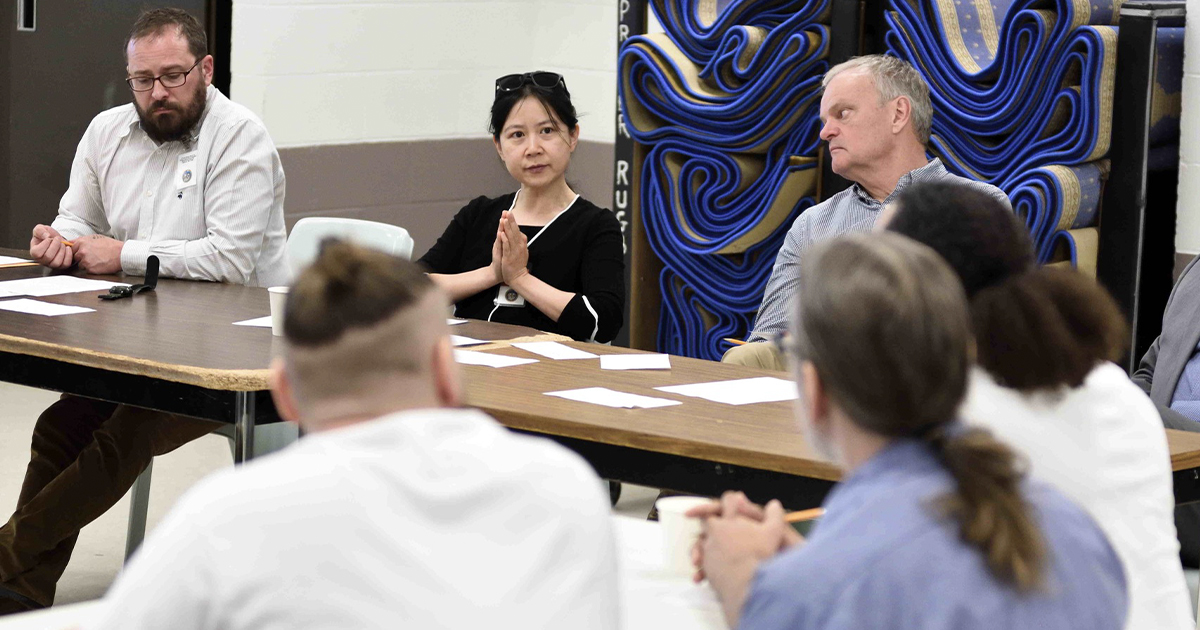
SU’s relationship with ECI began in 2000 with an independent study in philosophy. A group of four students, inspired by a book about studying philosophy in prison, began meeting with incarcerated learners. The effort grew into a volunteer program involving book discussion groups, creative writing and, more recently, Ethics Bowl activities.
The program has operated every semester since, including throughout the COVID-19 pandemic, when participants continued through email. Stock, who began volunteering with the program in 2012 and has coordinated it since 2014, said the experience has demonstrated the value of providing meaningful educational opportunities inside ECI.
“These are some of the best conversations I've ever had as a professional philosopher,” Stock said. “Philosophy is in part about understanding the lives we lead, and these are men who come to those conversations with a whole variety of lived experiences to contribute.”
For more than two decades, SU’s programming at ECI has been non-credit bearing. Stock has long hoped for the opportunity to provide the same kind of academic coursework available to students on the SU campus.
The new funding provides resources to lay the groundwork for that possibility. A major focus will be faculty development, including professional development for faculty interested in designing courses that eventually could be offered at ECI.
Developing a full Prison Education Program (PEP) is a significant undertaking, Stock said, with the process from initial development to full recognition potentially taking up to five years. The work also requires creative approaches to courses that may be difficult to offer in a correctional setting, such as laboratory sciences.
Ultimately, Stock hopes the effort can lead to students earning SU degrees while incarcerated and provide pathways for them to continue their education after release.
The grant also is supporting a new justice-impact peer support specialist position on SU’s campus. The position is designed to help students who have had contact with the criminal justice system – as victims, as witnesses, or through familial connections - navigate campus and community resources, including assistance related to housing, finances, and other needs.
SU enters this next phase of its relationship with ECI with an advantage because of its longstanding relationship with ECI staff.
“We have something that almost no other program has, which is a really good [pre-existing] working relationship with staff at the prison,” Stock said.
For Stock, expanding access to higher education at ECI is ultimately about recognizing the contributions that incarcerated and formerly incarcerated people can make to their communities.
“Each student that you have has something to offer that only they can offer,” he said. “We are missing something if we lack the perspective of people who have been incarcerated.”
SU has benefited from this perspective for years, and this new grant gives the University a way to strengthen that connection even more.
Learn more about SU and opportunities to Make Tomorrow Yours at the SU website at www.salisbury.edu.