Richard A. Henson School of Science & Technology

Richard A. Henson Medical Simulation Center

Continuing Education Classes

Browse and register for our Continuing Education Classes:

Class Catalog & Registration

Staff

Thalia Van Opstall-May
Clinical Simulation Specialist
(P1) 102
106 Pine Bluff Road
Salisbury, MD
txvanopstall@salisbury.edu
(410) 546-5010
(410) 546-5013 Fax

Press Releases

Medical Simulation Education Research at SU 

Selected Studies Supporting Medical Simulation Education

Site location

Construction Photos

Floor Plan (PDF)

Events & Galleries

Simulation Center Video
play video
Produced by Salisbury University student Jeanette Lebarron (1:32)

Ribbon-cutting Ceremony Photo Gallery

Naming Opportunities

For more information call: 410-543-6175

Nurse

The primary goal of the high-fidelity Medical Simulation Center (SIM Center) is to provide invaluable experiences for students in a number of programs including the planned Doctor of Nursing Practice Program to be offered in the fall of 2011. The SIM Center will also support revenue-generating development opportunities for regional health professionals and provide revenue-generating human performance services to local citizens.

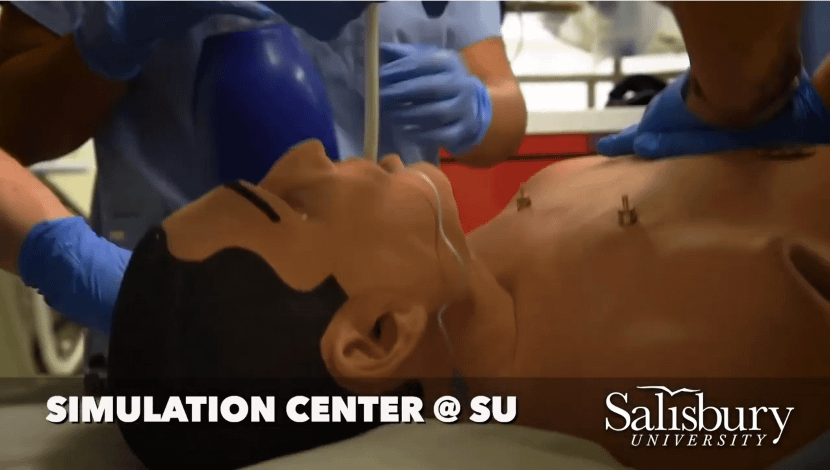
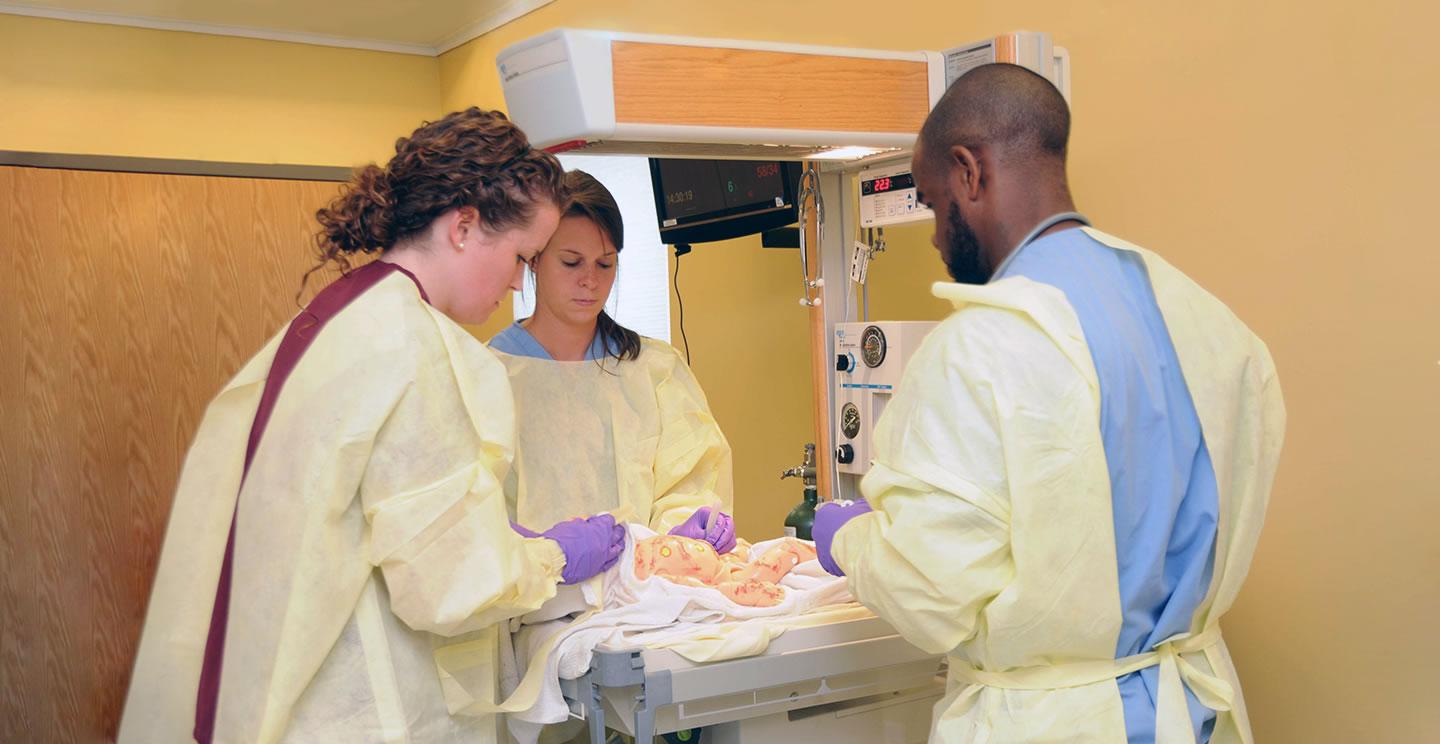
Simulation experiences typically involve high-fidelity medical mannequins which can be remotely controlled to enact planned scenarios demonstrating various clinical events. The simulation experiences are video-taped (typically with multiple cameras) for later review by instructor and students. Alternatively, ‘standardized patients’ (trained actors) may interact with student clinicians and portray various illnesses (e.g. mental health symptoms). The interactions between student and ‘standardized patient’ are filmed for later review and feedback.

There are several important reasons for using simulation within health care education including:

  1. Allowing students to have experiential learning where clinical opportunities are limited or entirely not available (e.g., neonatal intensive care, pediatric acute care, labor/delivery/post-partum/recovery, etc.);

  2. Providing students with exposure to simulated symptoms of rare events that if not identified in the clinical setting would most assuredly result in death or harm.

  3. Simulating invasive procedures that pose real risks to actual patients, and

  4. Reducing litigable risk to the student and the institution by using simulators instead of real patients.

Salisbury University purchased four medical condominium units at the Pine Bluff Medical Center South located at 106 Pine Bluff Road in Salisbury to be converted into the University’s SIM Center. These existing units were previous medical and rehabilitation (physical) facilities. The existing total gross square footage of these four spaces is approximately 4,825 GSF. It is located 1 block south of the main campus and is within a short walking distance from Devilbiss Hall.

Vision

The vision for the Salisbury University Medical Simulation Center targets three main goals:

  1. Enhancing nursing, respiratory care, medical lab science, and other health care-related education at Salisbury University through:

    1. Improved educational experiences for students by allowing students to practice technical skills and scenarios more realistically in a controlled and learner-friendly setting.
    2. Increased enrollments in healthcare courses (e.g., Nursing, Respiratory Therapy, and Applied Health Physiology).
    3. Improved graduate self-confidence and performance of duties entering the workforce.
  2. Increasing the ability of Salisbury University to offer continuing medical education courses including standardized courses from several professional organizations (e.g. American Heart Association, American Academy of Pediatrics, and Society of Critical Care Medicine) and as may be required by new licensure paradigm in Nursing.

  3. Providing an opportunity for Salisbury University to offer sophisticated human performance analysis and training to the community. The M.S. program in Applied Health Physiology (AHPH) and undergraduate program in Exercise Science train their graduates to work with patients/clients in rehabilitation, fitness and/or sport performance. Currently, the programs teach techniques of evaluating physical fitness (e.g., VO₂ Max Testing, Lactate Threshold Testing, Body Fat Analysis, etc.). Developing a Human Performance Center where these measurements could easily be measured on subjects would provide a valuable learning lab for APHP and Exercise Science students. In addition, a Human Performance Lab could be a revenue-generating resource that provides valuable services for community members.

This need is magnified by program growth (including the planned DNP (Doctor of Nursing Practice) program); the high quality of simulation facilities at our competitor institutions; and the regional lack of access to pediatric, obstetric, and other types of clinical experiences.

Medical Simulation and Human Performance Center