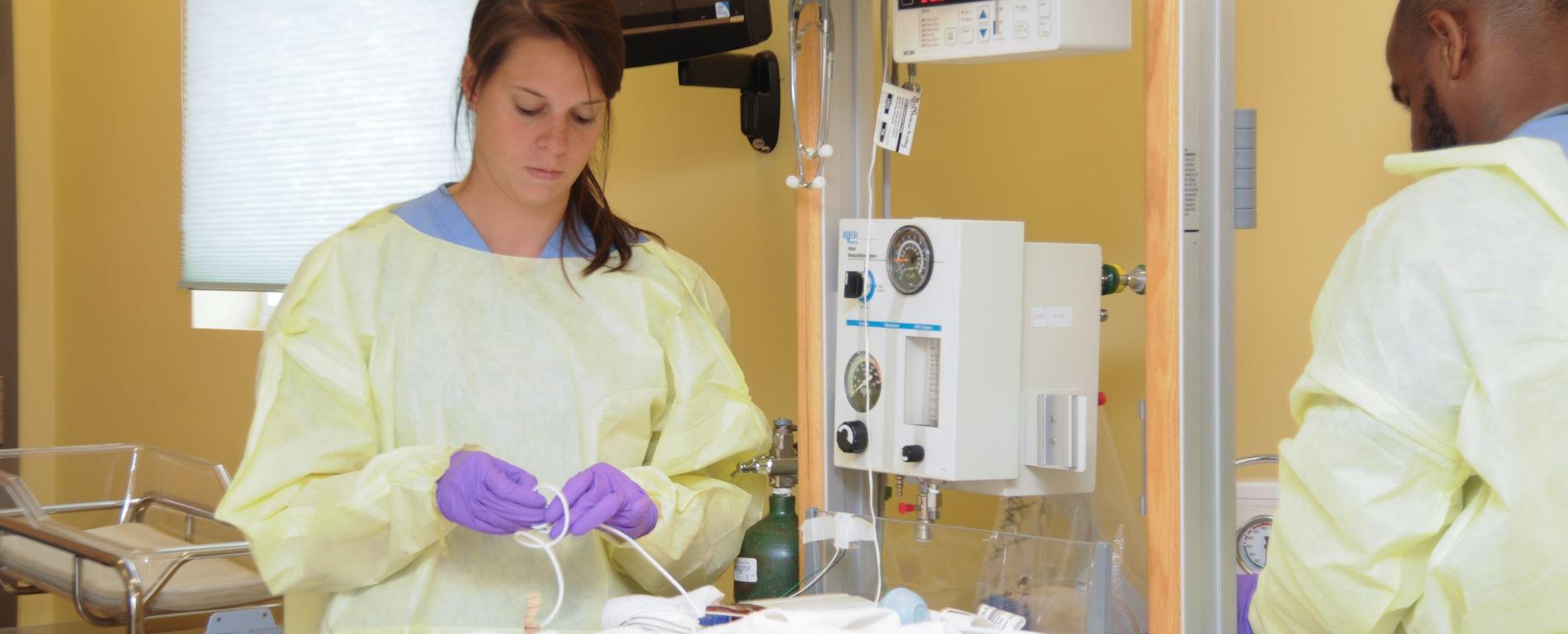
Welcome to the Department of Health Sciences
Health
Professions Advising Program (HPAP)
HPAP provides guidance for careers in medicine, dentistry, vet medicine,
physical therapy, physician assistant, pharmacy, optometry, podiatry,
occupational therapy and others.
MAJOR
Medical Laboratory Science
MINORS
Clinical Biochemistry
Clinical Hematology
Clinical Microbiology
Transfusion Services
MAJOR
Respiratory Therapy
GRADUATE
Applied Health Physiology (M.S.)
Graduates of all three programs in
the Health Science Department
have successfully gained entrance
into many graduate programs
including:
Medicine
and Pharmacy
Physical Therapy
Physician Assistant
Forensics
Master of Business Administration
Education
Biotechnology
Hospital Administration
Information Technology
|
Welcome to the Department of Health Sciences! Our department provides both academic programs and advising support for students interested in being part of the health care team. Healthcare encompasses a wide range of disciplines that include direct patient care as well as diagnostic, technical and therapeutic professions. Currently our department offers two undergraduate programs in Medical Laboratory Science and Respiratory Therapy and graduate program in Applied Health Physiology. In addition, our department provides academic planning assistance, through the Health
Professions Advising Program (HPAP), for students interested in health careers that involve post-baccalaureate education. HPAP provides academic guidance to students on developing their academic career, knowledge, and experiences necessary to gain admission to a post-baccalaureate health profession program of their choice. Additional information about the academic programs housed within the department can be found directly below. Students seeking academic guidance for post-baccalaureate medical professions not available through our department can be found by clicking on the link to HPAP located below on the right side of the webpage.
About the Department
The Health Sciences Department
strives to be a leader in the
generation, dissemination and
application of knowledge that
advances the sciences and practice of
our integrated health-related
disciplines. We build and sustain
academic programs that meet current
and emergent needs of the health
care community.
The Health Sciences Department
is comprised of two undergraduate
programs, medical laboratory science
and respiratory therapy, and a
graduate program in applied health
physiology. Each program provides a curriculum that prepares graduates for national certification in their fields of study. Health Sciences Department
students must have an aptitude for
science and a good working knowledge
of chemistry, biology, physiology, math
and microbiology.
During the first two years of each
undergraduate program, students
take prerequisite and General
Education courses. Admission into
each of the undergraduate programs
is a two-step process that includes
both admission to Salisbury
University and acceptance into the
upper-division professional program.
Program admission is competitive,
and it is highly recommended that
students wishing to pursue the degree
seek academic advisement early.
Information about admission policies
can be found within the University’s
catalog. The last two years comprise
the professional core, offering courses
in the major with student laboratories
accompanied by rotations through
clinical facilities. The courses prepare
students to practice in laboratory
science or respiratory care under the
guidance and supervision of
professionals during internships in
“real-world” environments.
OPPORTUNITIES WITHIN
THE DEPARTMENT OF
HEALTH SCIENCES
-
Being a Medical
Laboratory Scientist
Medical laboratory science (MLS) is a
branch of medicine dealing with
laboratory analyses used in the
diagnosis, prognosis and treatment of
disease as well health maintenance.
Successful MLS students generally like
science and laboratory work. They
love solving the diagnostic puzzle, and
many incorporate additional science
courses into their studies to allow for
admission into a variety of graduate
schools including medicine, forensics
and pharmacy. If you have ever been
fascinated by what you saw looking
through a microscope, what you
watched happen in a test tube or what
you found growing in Petri dish, this
major could be for you.
Career opportunities for MLS
graduates are expanding and the job
market is good. Think of how many
medical laboratory procedures are
now standard protocol: cholesterol
testing, drug screening, DNA analysis, microbiological cultures, etc. As the
population in the U.S. ages and the
capabilities of medical laboratories
expand, there is no end in sight for
increased demand for medical
laboratory services.
The national standard for MLS is a
baccalaureate degree that
incorporates clinical internships. At
SU, after two years of prerequisite
courses in basic science areas such as
biology and chemistry, upper-level
courses are provided in chemical and
biological testing related to health and
human disease, as well as internships
in various hospitals throughout the
region. Following completion of the
program, graduates are eligible to take
national certification examinations
which are recognized by medical
laboratory employers.
- Being a Respiratory
Therapist
If you enjoy working in a fast-paced environment where your technical
and scientific responsibilities will be
matched by a real need for human
relations skills, the profession of
respiratory therapy may be the career
you are seeking. Respiratory therapy is
a health care specialty that offers a set
of unique challenges in the areas of
prevention, treatment, management,
and rehabilitation of people with
diseases of the lungs and
cardiovascular system.
As a respiratory care practitioner,
you will be involved in a wide variety
of life-saving and life-supporting
situations. You will work side by side
with physicians, nurses and others on
the health care team, treating patients
ranging in age from newborns to
senior citizens. Your expertise will be
in demand, and opportunities to
expand your knowledge and skills will
be great.
In the current job climate, the
respiratory care practitioner’s talents
are a precious commodity in most
medical institutions. In addition,
many clinics, nursing homes and home care programs are beginning to
realize the potential benefits of having
a trained respiratory care practitioner
on staff. Coupled with the ever-increasing
number of cardiopulmonary
disorders diagnosed, these demands
ensure that individuals who enter the
profession will enjoy good career
opportunities.
Students can complete their
respiratory therapy coursework in
Salisbury on the main campus or at
the Universities at Shady Grove, in
Rockville, MD.
Applied Health Physiology
If you have ever wondered how you
could incorporate your passion for
studying exercise and human
performance as a career, then applied
health physiology may be for you.
This Master of Science professional
degree program is designed to prepare
graduate students for employment in a
variety of settings that promote health,
fitness and wellness (e.g., strength and
conditioning, cardiovascular/
pulmonary rehabilitation, geriatric
centers, youth centers, state and local
health departments, and corporate
wellness programs). The curriculum
emphasizes both theory and practice
in the preparation of administrators,
technicians and supervisors. The
program has been designed to include
the knowledge, skills and opportunities
for practice that are essential for the
development of health care and
strength and fitness professionals. A
career in this field will allow you to
apply evidence-based best practice
guidelines to individuals with their
unique needs and medical conditions,
feeling the satisfaction of knowing
that you have improved their lives and
future health.
Applied health physiology students
read, study and discuss a wide range
of theories and ideas related to health
and physiology. Students have actual
and simulated experiences in
practicing the technical,
administrative, and supervisory skills
of a health care provider and strength
and conditioning specialist. The
program curriculum allows graduates
to go directly into health care settings,
but many graduates also use it as a
stepping stone to further education in
a doctoral program.
* * *
|